Three answers to one weakness
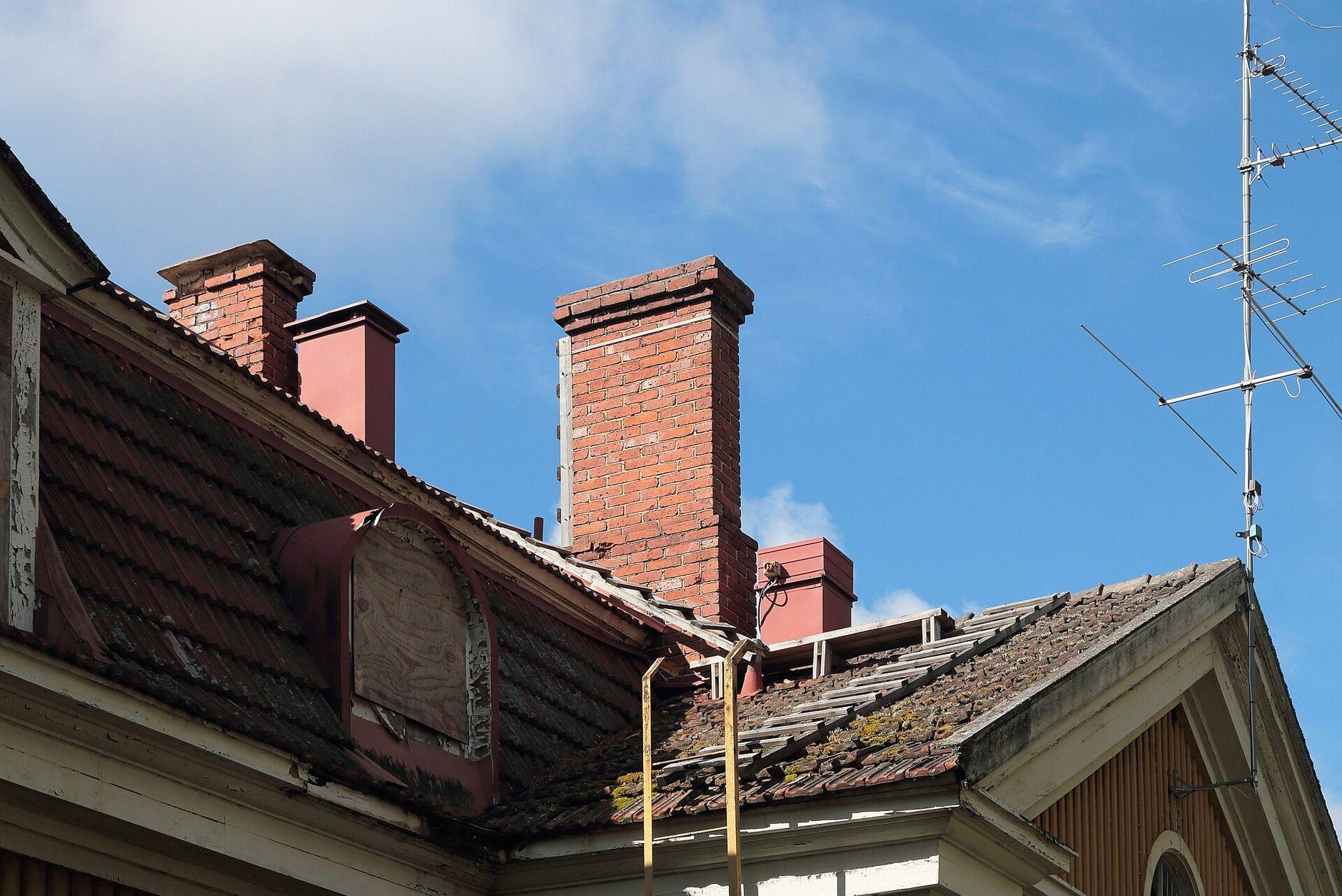
Every option in this comparison tries to solve the same problem: a tall column of brick that is poorly attached to the house beside it. When the ground shakes, the brick wants to carry on doing what it was doing a moment ago, while the wooden house has already moved on. The connection between them, and the brick above the roof, take the strain. Owners in Aliso Viejo with a masonry chimney usually hear three answers. They are not interchangeable, and the right one depends on the brick you start with.
Bracing: steel above the roof
A brace is a steel member fixed to the stack above the roofline and anchored down into the roof framing. Its job is to stop the free-standing top from rocking. It does not repair anything. If the top is sound, a brace gives it support it never had. If the mortar is already broken, a brace ends up holding loose brick together with nothing in between.
Bracing suits:
- A stack that rises well above the roof but whose mortar still holds.
- Owners who want to keep the original top and its look.
- Houses where the roof framing near the chimney is sound enough to take the anchors.
Ties: holding the stack to the house
Ties work lower down. Steel bands or angles are fixed to the brick at each floor and ceiling the chimney passes, then bolted into the joists, so the column cannot swing away from the wall. On a chimney built against an exterior wall, a gap that widens toward the top is the classic sign that this connection has let go.
Ties suit:
- Chimneys on an outside wall where a gap has begun to open.
- Stacks where the brick is sound and the weak point is the attachment.
- Work paired with a brace above the roof.
Rebuilding with steel inside
When the masonry has already failed, there is nothing for steel to grip. A rebuild takes the loose courses down and lays new ones, and that is the moment reinforcing bar can go inside the stack and be tied back to the framing. It costs more than a brace or ties, because it is masonry work plus steel, but it is the only one of the three that replaces broken brick. Our chimney rebuilds page covers the work.
Side by side
| Brace | Ties | Rebuild with steel | |
|---|---|---|---|
| Mends broken mortar | No | No | Yes |
| Keeps the original top | Yes | Yes | Partly, where brick is reused |
| Works on loose brick | No | No | Yes |
| Needs roof access | Yes | Sometimes | Yes |
| Often paired with | Ties lower down | A brace above | New crown, flashing and cap |
On cost, the order is usually the same: a brace alone is the smallest job, ties land close to it, and a rebuild costs the most because it includes every course of brick taken down and relaid. A mix of brace and ties on sound brick is often well below a rebuild, which is one more reason to know the state of the mortar before choosing.
The deciding factor
Not the price. The condition of the mortar decides. That is why we start with a Level 2 inspection with a video scan, $380, plus a look at the stack from the roof and in the attic. The camera shows whether the tile inside has split; the roof shows whether the band above the shingles is still solid; the attic shows whether the stack has moved against the framing.
From those three views we can say which approach your brick can take. Sometimes the answer is a mix: repoint the open joints through masonry repair, then brace the sound top. Sometimes it is plain that only a rebuild makes sense.
Book the Level 2 and ask which approach fits. Mention the age of the house and any crack you can point to from the yard.
What steel cannot promise
No steel makes a masonry chimney quake-proof. Bracing, ties and reinforced rebuilds lower the chance that brick falls onto the roof, the yard or the driveway in the next shake. We describe the options in those terms. We do not cite rebates or code sections we cannot stand behind for your particular house. If your city wants a permit for the work, the written scope says so.
Where many Aliso Viejo homes sit
Plenty of homes here were built with factory-made fireplaces inside framed chases rather than brick stacks. None of the three options above applies to those. A chase can still suffer in a quake: the metal flue sections can separate and the chase cover can twist out of square. A Level 2 sees those as well, so the first visit is the same whether your chimney is brick or framed.
A chimney on the coast side
Homes toward Dana Point and Laguna Niguel live in salty, damp air. Steel left bare there rusts, and a rusted brace or tie loses the strength it was fitted for. On those houses we specify galvanised or stainless hardware and check the fixings into the framing for rot before anything is bolted on. Inland, around Aliso Viejo and Mission Viejo, summer heat is the harder test: sealants around anchors dry out and crack, so we look at those every time we are on the roof for another job.
Reading the scope
Whichever approach the brick allows, the written scope from Travers Chimney Company lists it in plain lines: where each brace or tie goes, how many courses come down if any, what steel goes in and what the top is finished with. If two approaches are reasonable, both appear side by side so you can choose with the figures in front of you.
The seismic retrofit page explains the steel work in more depth. To have your own stack looked at, leave the address on our contact page.
Reading About It Is One Thing
Travers Chimney Company looks at your own chimney for movement, cracks and leaks, then puts the findings and any repair price in writing. Visits run from Aliso Viejo across Orange County.